Elephantine Island
📍 Get there
Coordinates: 24.0858, 32.8892
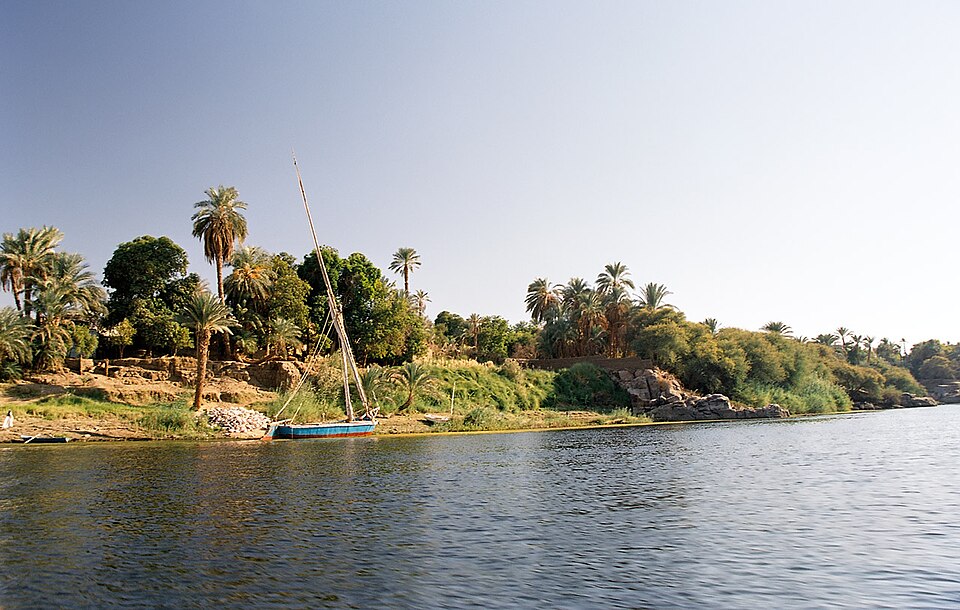
Elephantine - Abu in ancient Egyptian, "the place of elephants" because of the ivory trade with Nubia - was for thousands of years the southernmost town of Egypt and the country's main customs post for goods coming up from Africa. The southern half of the island is one giant archaeological site, the northern half a quiet Nubian village reached by motor-launch from the Aswan corniche.
The ancient town is dominated by the Temple of Khnum - the ram-headed potter god who shaped humans on his wheel and controlled the annual Nile flood - and the older Temple of Satet, dedicated to his consort, the goddess of the cataract. Both temples have been reconstructed in parts. Nearby stand the famous stepped Nilometer, used to measure the river's level and so set the year's taxes, plus tombs of Old Kingdom officials and the foundations of houses inhabited by a Jewish military garrison in the 5th century BC, whose Aramaic papyri rank among the most important Persian-period documents from Egypt.
The on-site Aswan Museum displays the smaller finds.
Highlights
- Temple of Khnum and Temple of Satet
- Nilometer - stepped stone gauge
- Foundations of the Jewish-Aramaic garrison settlement
- Aswan Museum on the island
- The Nubian village on the north end of the island
Visiting
- Opening hours: 7 am – 4 pm
- Tickets: ~200 EGP foreign adults; combined with the museum
- Getting there: motor-launch (5 min) or felucca from the Aswan corniche
- Nearby: Qubbat al-Hawa, Nubia Museum, Philae