Gebel el-Silsila
📍 Get there
Coordinates: 24.6447, 32.9344
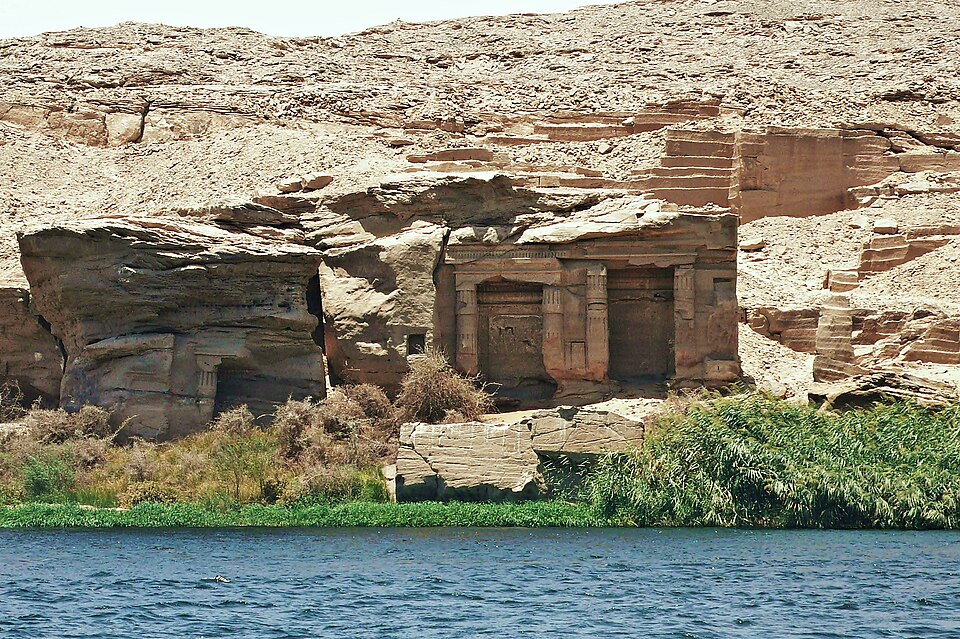
For most of pharaonic history the sandstone used to build the temples of Upper Egypt - Karnak, Luxor, Edfu, Kom Ombo, Esna - came from one place: Gebel el-Silsila ("Mountain of the Chain"). The Nile is at its narrowest here and ancient quarrymen attacked both banks, leaving cliffs marked with chisel scars, half-finished sphinxes, abandoned obelisks and thousands of dedicatory stelae and graffiti carved by the workers and the kings who employed them.
The site's standout monument is the Speos of Horemheb - a rock-cut chapel on the west bank with carved rooms dedicated to seven gods, plus the celebrated relief of Horemheb's Nubian campaign. Nearby are smaller chapels of Seti I, Ramses II and Merneptah, and a string of stelae celebrating successful Nile inundations.
Recent Swedish-led excavations have uncovered enormous quarry camps, a New Kingdom temple of Sobek, and a fortified Roman waystation.
Highlights
- Speos of Horemheb - rock-cut chapel of seven gods
- Stelae and chapels of Seti I, Ramses II, Merneptah
- Quarry faces with original mason marks
- View of the narrow Nile passage
Visiting
- Opening hours: 7 am – 4 pm
- Tickets: ~80 EGP foreign adults
- Best time: typically reached as a felucca or boat stop on a Nile cruise between Aswan and Luxor
- Nearby: Kom Ombo Temple, Edfu Temple, Al-Kab