Saqqara
📍 Get there
Coordinates: 29.8714, 31.2167
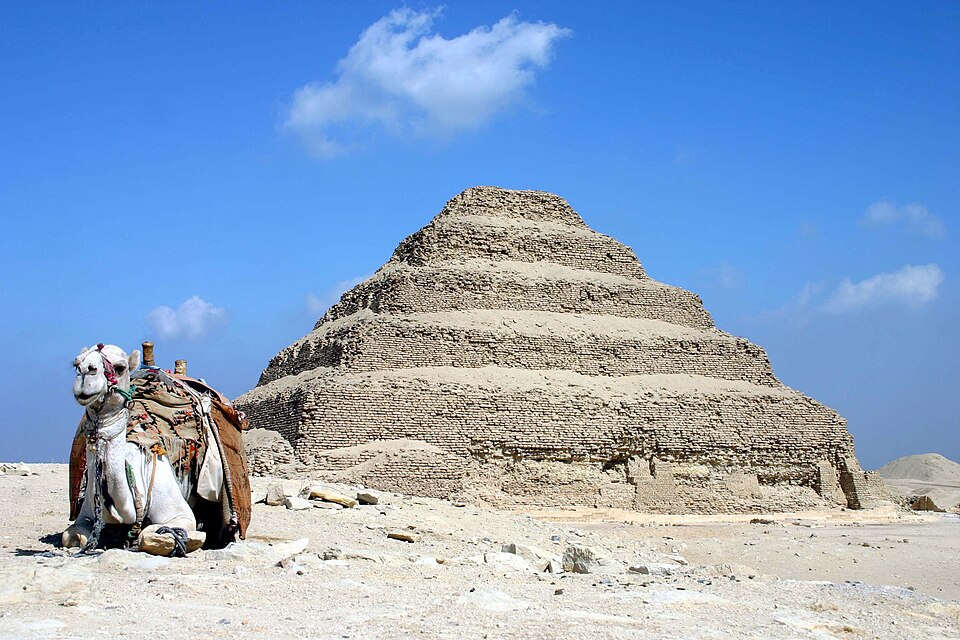
Saqqara was the royal cemetery of Memphis, Egypt's first capital, and contains the single most important building in the history of architecture: the Step Pyramid of Djoser, designed by the polymath Imhotep around 2670 BC and the oldest large-scale cut-stone structure on earth. From this experimental six-stepped mound the smooth-sided pyramid of Giza evolved within only a century.
But Saqqara is far more than Djoser. Spread across some 7 km of desert plateau it holds pyramids of at least sixteen kings (Unas, Teti, Pepi I and II among them), the colourful mastaba tombs of Old Kingdom officials with their famous reliefs of marsh and farm scenes (Ti, Mereruka, Kagemni), the Serapeum - the immense underground galleries where the sacred Apis bulls were buried in granite sarcophagi - and on-going discoveries of intact Late Period coffin caches that make headlines almost every year.
The on-site Imhotep Museum at the entrance is small but excellent; treat it as your first stop. The recently reopened tomb of Pharaoh Unas is famous for the earliest Pyramid Texts ever carved.
Highlights
- Step Pyramid of Djoser + reconstructed Heb-Sed court
- Pyramid of Unas - first Pyramid Texts
- Mastaba of Ti and Mastaba of Mereruka - superb painted reliefs
- Serapeum of the Apis bulls
- Imhotep Museum at the entrance - see our page
Visiting
- Opening hours: 8 am – 5 pm
- Tickets: ~450 EGP; Serapeum and certain tombs require extra fees
- Best time: morning, then continue to Dahshur
- Nearby: Dahshur, Giza Plateau, Memphis open-air museum
Getting there
Saqqara is about 30 km south of Cairo, and most visitors come by private car. A day covering the Pyramids and Saqqara costs about $60–160 for the car (2026), and Dahshur is a short drive further.
Plan the day with a driver